
Society Redevelopment Amenities — What Mumbai Members Must Demand
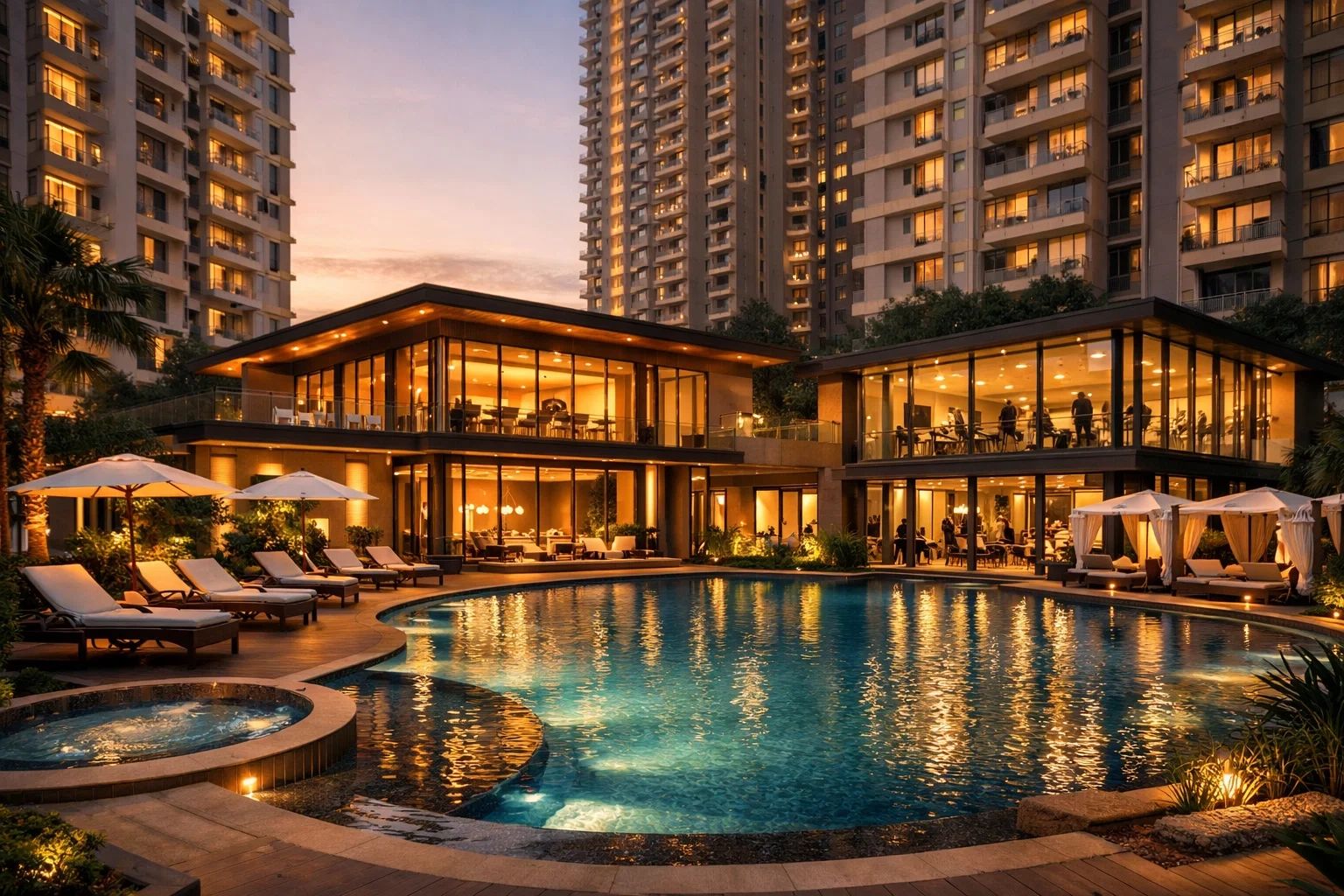
When a builder presents a redevelopment proposal to your housing society in Mumbai, the amenity list is often the showstopper. A swimming pool, a gymnasium, a landscaped garden, a clubhouse, a children’s play area — it all sounds wonderful on paper.
But here is an important question every member should ask — has the list of amenities been explained in detail? Because the devil, as they say, is in the details.
Why a Vague Amenity List Is a Red Flag
Builders often present amenities in broad terms during the initial pitch. They might say the building will have a gymnasium or a multi-purpose hall, but they rarely specify the size, the quality of equipment, the exact location within the project, or whether there will be additional charges to use these facilities.
This vagueness is not always intentional, but it works in the builder’s favour. If the amenity list is not detailed and documented, the builder has the flexibility to deliver a smaller gym, a basic garden, or a clubhouse that does not match what was promised during the presentation.
What Should the Amenity List Include?
A comprehensive amenity list in your redevelopment agreement should cover amenities for individual flats — such as modular kitchen fittings, bathroom fixtures, flooring type, electrical points, balcony specifications, and window types. It should also cover amenities for the building — such as lifts with specifications, lobby design, corridor width, fire safety equipment, CCTV, and intercom systems. And it should detail amenities for the society — such as gymnasium with equipment specifications, swimming pool with dimensions, children’s play area, senior citizen sitting area, multi-purpose hall, garden, jogging track, and parking facilities.
For each amenity, the agreement should specify the size or dimensions, the brand or quality standard, whether it will be maintained by the builder for any initial period, and whether there are any recurring charges for members to use the amenity.
Common Amenities in Multi-Society Redevelopment
If your redevelopment involves multiple societies being developed as a single complex, there will be amenities shared among all the societies. This raises additional questions. Who will control and manage these shared amenities? How will the maintenance cost be divided? Will existing members get priority access or membership? Can the builder charge new flat purchasers separately for access to these amenities?
These are important questions that must be addressed in the Development Agreement. Without clear documentation, disputes between societies and with the builder are almost inevitable.
The Amenity Promise vs. The Amenity Delivered
One of the most common complaints in redevelopment projects is the gap between what was promised and what was delivered. Members are shown a beautiful presentation with world-class amenities, but what they get upon possession is far less impressive.
To protect against this, your Development Agreement should include detailed specifications for every amenity, and the society should have the right to inspect the amenities before taking possession of the building. If the amenities are not as per the agreed specifications, the builder should be obligated to rectify them before the handover.
RERA and Amenity Obligations: What the Law Says
The Real Estate (Regulation and Development) Act, 2016 has significantly strengthened the legal position of flat buyers and society members when it comes to amenities. Under RERA, every promoter must register the project with the Real Estate Regulatory Authority and disclose all proposed amenities in the project brochure and registered agreement. Section 14(2) of RERA explicitly provides that the promoter shall be responsible to obtain completion certificates or occupancy certificates for the project, and the common areas including all amenities must be completed before seeking such certificates.
MahaRERA has taken a strong stand on amenity delivery. In several orders, the Authority has directed developers to complete promised amenities within stipulated timelines or face penalties under Section 63 of RERA, which can extend to five percent of the estimated cost of the project. The Authority has also held that amenities form part of the consideration for which the flat buyer has paid, and failure to deliver them constitutes a deficiency that entitles the buyer to compensation under Section 18 of the Act.
For society redevelopment projects specifically, the amenity list becomes part of the Development Agreement registered with the Sub-Registrar. Once registered, it has the force of a legal obligation, and the developer cannot unilaterally alter, reduce, or eliminate any promised amenity without the written consent of the society’s general body.
Maintenance and Handover of Amenities
One of the most overlooked aspects of amenity negotiation is the post-completion maintenance period. Many Development Agreements are silent on who will maintain the amenities during the initial period after possession and what happens when the maintenance responsibility is transferred to the society.
The best practice is to include a clause requiring the developer to maintain all common amenities at their own cost for a minimum period of one year after the completion certificate is obtained, or until the society is formally handed over management control, whichever is later. During this period, the developer should bear all costs including equipment servicing, staff salaries for security and housekeeping of common areas, and any repairs needed due to construction defects.
The Development Agreement should also specify the exact process for handover of amenities to the society. This includes physical handover of all equipment manuals, warranty cards, AMC contracts, fire safety certificates, lift maintenance records, water treatment plant operation guides, and electrical infrastructure drawings. The society should have the right to appoint an independent technical auditor to inspect all amenities before accepting the handover, and the developer should be required to rectify any deficiencies identified during this audit.
Under the Maharashtra Cooperative Societies Act 1960, the managing committee of the society assumes responsibility for the common areas and amenities once the conveyance is executed. This makes it essential that the handover is documented meticulously, as any latent defects discovered after the formal transfer may be difficult to claim against the developer unless the Development Agreement contains a specific defect liability clause.
Hidden Costs of Premium Amenities
While the allure of a swimming pool, a well-equipped gymnasium, a rooftop garden, and a clubhouse is undeniable, society members should carefully consider the long-term maintenance costs of these amenities before demanding them in the Development Agreement.
A swimming pool, for example, requires regular chemical treatment, filtration system maintenance, lifeguard services, and compliance with local health department regulations. The annual maintenance cost of a medium-sized swimming pool in Mumbai can range from Rs. 5 lakh to Rs. 12 lakh, depending on the size and quality of equipment. Similarly, a gymnasium with modern equipment will require periodic servicing, equipment replacement every five to seven years, and insurance coverage for accidents.
The society should request the developer to provide a projected annual maintenance budget for each proposed amenity at the time of negotiation. This allows the members to make an informed decision about whether they truly want a particular amenity or whether the long-term cost outweighs the benefit. Some societies have found it more practical to negotiate for a one-time corpus fund from the developer instead of expensive amenities that only a fraction of the members will use regularly.
It is equally important to verify that the building’s electrical and plumbing infrastructure can support the proposed amenities. A swimming pool requires dedicated water supply and drainage, a gymnasium needs reinforced flooring, and a banquet hall requires separate electrical metering and fire safety provisions. These infrastructure requirements should be included in the approved building plan and the structural engineer’s certification.
Essential Amenities Every Society Should Insist On
While premium amenities are a matter of choice, certain basic amenities are non-negotiable and should be included in every redevelopment agreement. These include adequate lift capacity with a minimum of two lifts per wing for buildings above seven floors, one of which must be a stretcher lift as mandated by the National Building Code. Fire safety systems including fire extinguishers on every floor, fire alarm systems, fire escape staircases, and a fire-fighting water tank with pumps are mandatory under the Maharashtra Fire Prevention and Life Safety Measures Act, 2006.
The society should also insist on a rainwater harvesting system, which is mandatory for buildings on plots larger than 1000 square metres in Mumbai. Solar water heating systems, a sewage treatment plant for larger projects, and electric vehicle charging infrastructure in the parking area are increasingly becoming standard requirements under municipal regulations and should be negotiated into the agreement.
Accessible design features including ramps, handrails, tactile paving, and accessible lift controls are required under the Rights of Persons with Disabilities Act, 2016 and the Harmonised Guidelines and Standards for Universal Accessibility in India. These are not optional upgrades but legal requirements that the developer must incorporate into the building design.
Security infrastructure including CCTV cameras in common areas and entry points, video door phones for individual flats, access-controlled entry gates, and a dedicated security room with monitoring equipment should be specified with brand standards and coverage requirements. The Development Agreement should state the minimum number of cameras, the recording retention period, and who bears the cost of equipment replacement after the warranty period.
Asahi Legal Ensures You Get What You Were Promised
At Asahi Legal, we review every line of the amenity list and ensure it is documented with specific details in the Development Agreement. We help societies negotiate amenities that genuinely add value to members’ lives — not just marketing bullet points that look good in a brochure.
If your society is evaluating a redevelopment proposal, contact Asahi Legal to ensure the amenities promised are the amenities delivered.
Contact Asahi Legal — Visit asahilegal.in or reach out directly for expert redevelopment advisory.
Author: Amit | Asahi Legal
This article is for general information only and is not legal advice or an invitation to engage the firm. Laws and judgments change; please obtain specific legal advice before acting.