

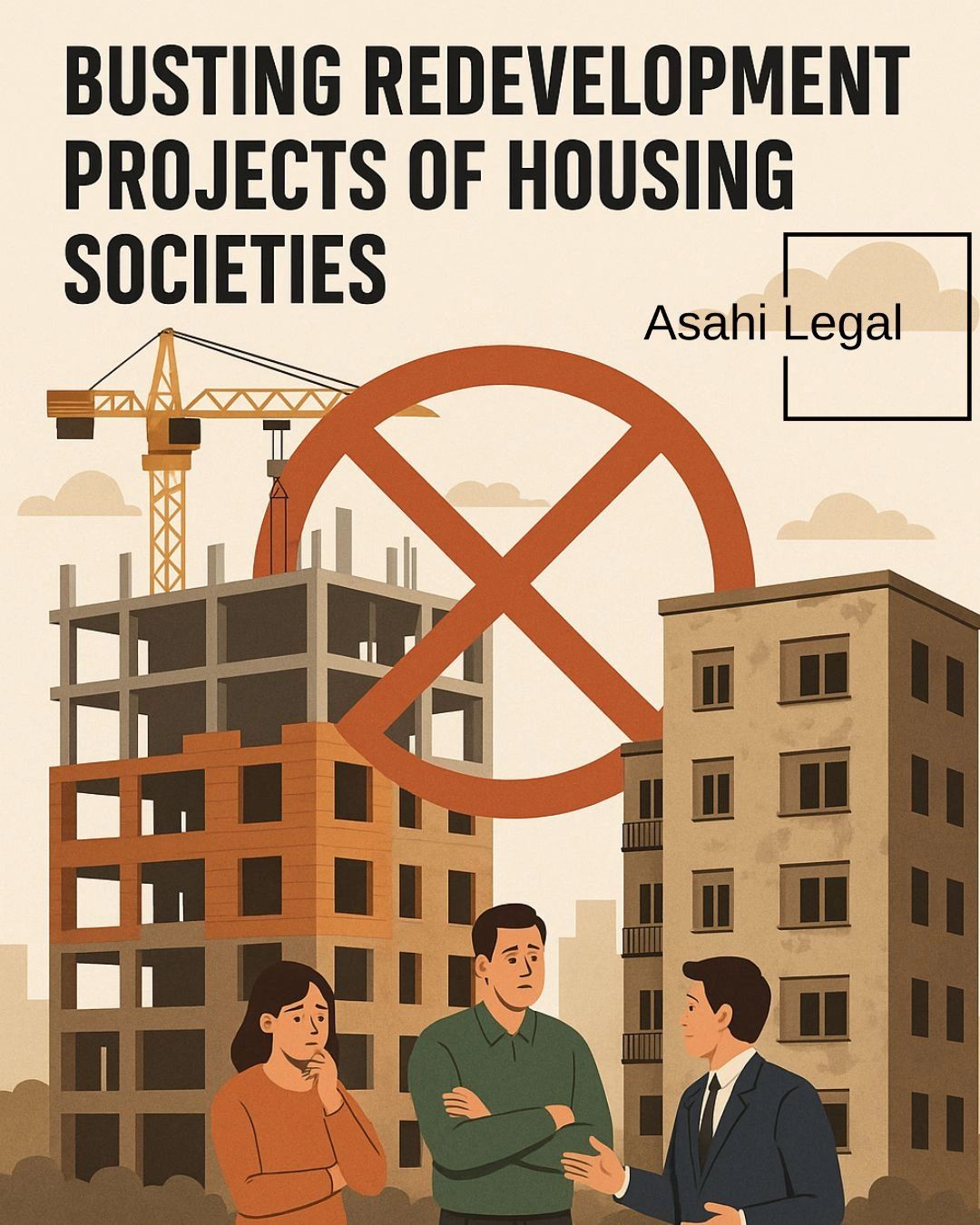
Redevelopment of housing societies is widely perceived as a much-needed solution for Mumbai and several other urban cities where residential buildings are decades old and have deteriorated due to time, lack of maintenance, and overuse. At first glance, redevelopment appears to be a win-win arrangement—residents look forward to modern flats equipped with new amenities, developers secure large-scale projects that generate significant revenue, and cities benefit from safer, more sustainable housing infrastructure.
However, the reality is not always so promising. A considerable number of redevelopment projects either remain incomplete or collapse midway, leaving society members in limbo. Families that vacated their homes with the hope of moving into new apartments often find themselves waiting for years, sometimes even renting temporary accommodations, while disputes, legal hurdles, or financial crises bring the redevelopment process to a standstill.
The truth is that the failure of many housing society redevelopment projects is rooted in a combination of poor planning, lack of transparency, weak contractual safeguards, and frequent disputes among stakeholders. Members are usually enthusiastic about the prospect of shifting into newly constructed homes, but in their eagerness, they sometimes ignore crucial checks such as verifying the builder’s reputation, assessing the soundness of the redevelopment agreement, and ensuring that the project complies with government rules and approvals.
Common Pitfalls in Redevelopment Projects
One of the biggest reasons why redevelopment projects collapse is insufficient due diligence. In many cases, housing societies select developers based on glossy presentations, promises of extra floor space, assurances of luxury amenities, or shorter construction timelines. Unfortunately, decisions driven by promises rather than hard facts create huge risks. When a developer lacks the financial stability or a proven track record, the likelihood of the project stalling or being abandoned becomes very high. Members who trusted the builder then face the nightmare of uncertainty, additional financial burdens, and endless delays.
Another recurring and critical issue is the absence of strong redevelopment agreements. Many societies sign agreements that are either vague or drafted without expert legal guidance. These agreements often miss key details such as clear construction timelines, specific possession dates, penalties for delays, or the developer’s precise responsibilities. In such cases, developers find loopholes that allow them to delay possession, alter building plans without consent, or cut corners on quality and promised facilities. This lack of clarity eventually works against the society members, who are left with little legal protection.
Equally problematic are the internal conflicts among society members. Redevelopment requires unity and cooperation, but societies often struggle to achieve consensus. Disagreements on which developer to select, disputes over allocation of flats, or mistrust between members can create long-standing divisions. Once disagreements escalate into legal battles, redevelopment projects lose momentum, and the delays become inevitable. In extreme cases, these conflicts lead to the project being scrapped altogether, leaving the society worse off than before.
The Way Forward
Despite the challenges, redevelopment of housing societies continues to be a practical necessity in urban India, particularly in cities like Mumbai where land is scarce and existing structures are rapidly deteriorating. For redevelopment to succeed, societies must act cautiously and take a well-planned, transparent, and legally secure approach.
Before signing any redevelopment agreement, societies should:
- Conduct thorough due diligence on the developer. This includes checking their financial stability, previous project history, and ability to deliver on time.
- Engage experienced legal experts who can draft and review agreements in detail to ensure that all timelines, responsibilities, and penalties are clearly defined.
- Maintain transparency in communication and decision-making so that every member is informed and no one feels left out of the process.
- Secure government approvals and ensure compliance before allowing developers to begin construction or before handing over possession of existing flats.
When these safeguards are followed, redevelopment can truly transform the lives of residents offering them larger, safer, and more comfortable homes while rejuvenating entire neighborhoods. However, without accountability and careful planning, what appears to be a golden opportunity can quickly deteriorate into a long-lasting nightmare.
Need Legal Guidance for Redevelopment?
At Asahi Legal, we understand the complexities and challenges involved in the redevelopment of housing societies. From drafting airtight redevelopment agreements to ensuring compliance with all legal formalities, our team provides end-to-end support to protect the interests of society members.
If your society is considering redevelopment or facing issues with an ongoing project our experienced legal team can help you navigate disputes, safeguard member rights, and ensure that the process is transparent and fair.
📞 Get in touch with Asahi Legal today for reliable legal advice and expert representation in redevelopment matters. Together, we can make your redevelopment journey smooth, secure, and successful.
This article is for general information only and is not legal advice or an invitation to engage the firm. Laws and judgments change; please obtain specific legal advice before acting.