

Introduction: The Redevelopment Opportunity
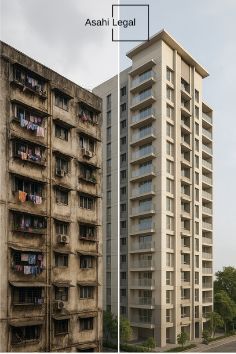
With real estate prices in Mumbai reaching unprecedented levels, residents of older buildings are discovering a valuable opportunity to leverage their existing properties through redevelopment. This option has become particularly attractive as it allows homeowners to unlock substantial value while upgrading their living standards. Redevelopment presents itself as the most practical, economical, and sustainable solution when aging structures become too expensive to maintain and repair.
As property values continue their upward trajectory and available land becomes increasingly scarce across major cities, builders and developers have shifted their focus toward existing structures that present redevelopment potential. The appeal of redevelopment extends beyond mere financial considerations. Residents gain access to improved lifestyles within modern architectural structures featuring landmark designs and contemporary amenities throughout every room. The benefits typically include additional carpet area, substantial increases in property valuation, along with financial advantages such as corpus funds, rental compensation for temporary accommodations, and allowances for brokerage and transportation during the construction period.
However, the redevelopment journey involves numerous considerations and potential challenges that demand careful attention and diligent oversight throughout the entire process. Understanding these factors becomes crucial for anyone contemplating redevelopment as a viable option for their housing society.
Prevention is Better Than Cure
Developers frequently offer enticing incentives to encourage the demolition of older structures and construction of modern edifices with additional floors. These proposals often include promises of extra area, monetary benefits, and brand new flats for existing property owners. While such offers may appear extremely attractive at first glance, prospective participants must consider several critical factors before committing to property redevelopment.
The primary stakeholders in any redevelopment project typically include landlords of tenanted buildings, cooperative housing societies, and developers. In South Mumbai, landlords of tenanted properties generally negotiate directly with developers for redevelopment of their holdings. Meanwhile, in suburban areas, thousands of older housing societies rely predominantly on their managing committee members to handle the entire redevelopment process. The concerning reality is that these committee members often lack technical expertise and operate as laymen without adequate legal knowledge or specialized understanding of redevelopment complexities.
Therefore, it becomes essential for society members to educate themselves about the various acts, laws, and rules that govern cooperative societies and the redevelopment process. This knowledge enables them to maintain vigilance against irregularities and illegalities while protecting themselves from unscrupulous builders who may engage in criminal and fraudulent activities. Recognizing the rampant irregularities and corrupt practices occurring during redevelopment in many housing societies, the Maharashtra Government issued specific guidelines to ensure transparency. Dr. Sudhirkumar Goyal, Principal Secretary of the Co-operation Department, released comprehensive dos and don’ts that must be strictly followed by societies pursuing redevelopment through notification CHS 2007/CR554/14-C dated January 3rd, 2009.
While not exhaustive, certain precautionary measures provide essential protection for societies against developer fraud and deception. The selection of a genuine developer represents the first critical decision. Societies should never choose a builder solely based on attractive financial offers, exorbitant carpet area increases, or promises of amazing amenities. Instead, selection must be based exclusively on merit, reputation, technical capability, professional experience, financial stability, construction quality, and successful completion of previous projects. This fundamental principle cannot be overemphasized, as the right developer selection often determines the entire project’s success or failure.
Hiring an experienced counselor or professionally competent advocate specializing in redevelopment matters proves equally crucial. The legal representative should take full responsibility for drafting the redevelopment agreement rather than leaving this critical task to the developer. The agreement’s terms and conditions must legally and practically safeguard the corporate interests of both the society as an entity and each individual member. During the drafting process, it becomes essential to anticipate every possible setback and include remedies for likely eventualities, ensuring the developer maintains commitment to project completion throughout the entire construction period.
Appointing a civil or structural engineer to monitor progress represents another vital safeguard. This professional should supervise on-site construction quality, verify that standard materials are being used, confirm that constructed areas conform to approved plans, remain vigilant against unauthorized and illegal construction or rule violations, and verify that promised amenities are actually being provided by the developer. Such technical oversight helps prevent numerous problems that commonly arise during construction phases.
Transparency within the managing committee must be ensured at all times, as committee members handle the entire redevelopment process and are responsible for protecting member interests. Unfortunately, suspicions often arise regarding committee members being in collusion with developers, and these suspicions sometimes prove accurate when committee members prioritize personal gains rather than ensuring fair deals for members and protecting the society’s corporate interests. Maintaining open communication and documented decision-making processes helps build trust and accountability.
During redevelopment, developers sometimes make unhealthy attempts with ulterior motives to twist or grossly violate the terms of the redevelopment agreement as originally agreed upon. They may unlawfully plan and construct additional or unauthorized areas beyond their legal entitlement, exceeding the plot FSI and the loaded TDR/FSI, purely for hidden financial gains. The buyers of such unlawful properties often find themselves entangled in deals that lead to costly litigation at later stages. Arresting these violations of laws and rules by developers becomes a critical responsibility of the monitoring process.
Delayed possession of flats represents a seemingly endless struggle between developers and societies. Countless cases exist where developers have abandoned or significantly delayed redevelopment projects due to insufficient fund inflow or diversion of resources from assigned projects to acquire additional ventures beyond their financial capacity. Some developers simply lack the competency to execute projects, leaving buyers to suffer both mentally and financially. The timeline commitments documented in redevelopment agreements frequently go unmet, creating significant hardship for society members.
Liquidity crunch situations have also been observed where certain developers, facing sudden financial constraints or having engaged in improper planning, abandon projects midway. Projects may become badly staggered, with members suffering the consequences for extended periods, sometimes years. Such developers typically stop rent payments for alternate accommodations hired by members and offer no monetary compensation for the delayed period, compounding the financial and emotional stress on affected families.
When societies find themselves cheated or deceived, they possess legal recourse. They can initiate action under Sections 415 and 420 of the Indian Penal Code, 1860, for breach of trust and cheating. Additionally, they can pursue remedies for deficiency in service, unfair trade practices, and violations of contracted terms under the Indian Contract Act, 1872. Understanding these legal protections empowers societies to take appropriate action when circumstances warrant such measures.
What to Negotiate with Developers
The primary focal area in any redevelopment negotiation involves payment of rent by the developer for transit accommodation. No building realistically completes within twenty-four months, despite optimistic projections. Managing committees must therefore ensure that advance rent for a minimum of twenty-four months is received upfront, and that a suitable penalty clause is inserted in the development agreement addressing defaults in handing over possession within the stipulated timeframe. This financial protection becomes crucial when construction extends beyond planned schedules.
The managing committee should demand that all financial benefits agreed upon, including corpus funds, rental compensation, transportation allowances, and brokerage fees, must be paid by the developer to members before they vacate their flats and before the society hands over the property to the developer for redevelopment. This upfront payment structure protects members from potential financial difficulties if the developer encounters problems during construction.
Insisting on providing a bank guarantee from a nationalized bank equivalent to the estimated construction cost of all flats becomes essential protection in case the developer fails to deliver the redeveloped flats to members. This guarantee serves as a financial safety net and demonstrates the developer’s seriousness and financial backing for the project. Other areas where managing committees should place emphasis include providing adequate numbers of car parking spaces, specifying additional carpet area increases, ensuring TDR purchase in the society’s name, and executing individual agreements with clear terms and conditions.
Alert Areas to Be Taken Care Of
The first and foremost step before proceeding with redevelopment involves conducting a comprehensive structural audit of the building. The structural audit report determines whether the building should undergo redevelopment or whether major repairs would suffice. In the absence of a technical report, passing a resolution in the general body meeting lacks legal permissibility. However, reality shows that many cooperative societies hastily call general body meetings and decide to pursue redevelopment without obtaining proper structural audit reports, creating legal vulnerabilities from the project’s inception.
Before initiating the redevelopment process, it must be confirmed that the land has been legally conveyed in the society’s name and that this conveyance has been suitably recorded in the property card issued by the Municipal Corporation. The absence of proper conveyance from previous owners or builders renders the entire redevelopment process subject to immediate breakdown. This foundational legal requirement cannot be overlooked without risking the entire project’s viability.
Many redevelopment projects have collapsed due to escalating demands from majority members. A high level of expectations emerges among members when redevelopment is proposed, and these expectations often become unrealistic or unmanageable. Societies should actively work to restrict or moderate such expectations to maintain project feasibility. Similarly, developer selection should not be determined by various exorbitant offers but rather according to the builder’s market standing, reliability, integrity, and proven credibility in the real estate industry.
Internal conflicts between managing committee members and resident members during the redevelopment progression must be avoided at all costs. Managing committees should refrain from negotiating directly with developers while keeping other resident members uninformed, as this practice breeds suspicion and destroys trust. The successful execution of any redevelopment project depends primarily on management by managing committee members with transparent efforts to protect the society’s corporate interests and the complete cooperation of every member. This success, in turn, depends on the capacity, honesty, and integrity of managing committee members entrusted with managing the entire redevelopment process.
Avoiding litigation with developers becomes important because ultimately the society and its members suffer losses due to time-consuming legal processes. Housing society members must ensure they elect managing committee members strictly according to election rules specified in the bylaws governing housing societies. Elected members should be known for their integrity, clean records, and honest dealings. Care should be taken not to elect office bearers who have consistently violated provisions of the Cooperative Act, rules, and bylaws to further their own self-interest, committed serious financial irregularities with society funds, or possess dubious records indicating corrupt backgrounds.
The task of satisfactorily completing redevelopment and helping members return to their dream homes is not inherently difficult, provided that office bearers and committee members remain sincere and honest while justifying their respective positions in promoting the welfare and wellbeing of society members. Leadership integrity often makes the difference between successful redevelopment and problematic outcomes.
Things to Be Aware of While Signing a Redevelopment Deal
The redevelopment agreement, also known as the development agreement, should be well-worded and unambiguously drafted to ensure that the overall interests of residents are protected with all necessary precautions to prevent litigation at later stages. Every clause deserves careful consideration and precise language that leaves no room for misinterpretation or exploitation.
Thorough study and factual verification of financial and technical data furnished by developers in tender documents is absolutely essential. Societies should not accept developer representations at face value but should instead conduct independent verification of all claims, credentials, and capabilities. This due diligence process may require engaging independent experts to validate the information provided.
The agreement must specify the period within which the developer shall procure the Intent to Develop and Completion Certificate, and in case of failure to meet these deadlines, the society shall have the exclusive option to cancel the agreement. Stipulating exact time schedules for project completion with specific milestones provides accountability and measurable progress markers throughout the construction period.
Ensuring the inclusion of an inflexible compensation clause for delays in project completion or possession of flats as a penalty clause in the redevelopment agreement protects member interests when timelines are not met. Every detail pertaining to construction specifications, materials to be used, and branded amenities should be specified explicitly in the redevelopment agreement. Anything vague or ambiguous will inevitably work against the interests of society members, as developers may exploit unclear language to reduce quality or skip promised features.
The transfer of development rights should be loaded in the society’s name before vacating the premises but after execution of the development agreement. This sequence ensures that the society retains some leverage and that the valuable TDR asset is properly secured. Care must be taken to ensure that all necessary permissions are obtained and legal formalities are fulfilled to secure the project by the developer before asking members to vacate the premises, preventing situations where projects become stuck after building demolition.
In cases where defective materials are used in redevelopment, a defect liability clause must be included in the agreement, specifying the warranty period, rectification obligations, and remediation procedures. The bank guarantee should be drafted simultaneously along with the redevelopment agreement, and the bank guarantee document should be simple and not tied up with unwarranted conditions that might make it difficult to invoke when needed.
Major laws required to be kept in mind include the Transfer of Property Act 1882, Registration Act 1908, Indian Contract Act 1872, Coastal Regulation Zone laws, state laws like the Maharashtra Ownership Flats Act 1963, Maharashtra Cooperative Housing Societies Act 1960, stamp duty laws, Development Control Rules, environmental law, tree cutting laws, municipal laws, and Slum Redevelopment Scheme provisions. If serious legal irregularities exist in the redevelopment process and are discovered halfway through, they can jeopardize the entire redevelopment with severe consequences. What the law does not permit cannot be accomplished either by the developer or by the society, regardless of mutual agreement.
Who Have Been Cheated?
Numerous criminal cases have been registered against erring developers where flat buyers and housing societies have been deceived and cheated regarding maintenance of development agreement terms. Common violations include failure to provide agreed amenities, using defective and substandard materials, causing delayed possession far beyond agreed timelines, engaging in financial irregularities, committing frauds in area measurements of flats, violating various laws and rules, and conducting unauthorized and illegal construction beyond approved plans.
These cases serve as cautionary tales for societies currently contemplating or undergoing redevelopment. Learning from the mistakes and misfortunes of others helps societies implement stronger safeguards and maintain greater vigilance throughout their own redevelopment journeys. The pattern of developer misconduct reveals common tactics and warning signs that informed managing committees can identify and address before problems escalate beyond resolution.
Conclusion
Redevelopment offers significant opportunities for housing societies to upgrade their properties and improve living standards while unlocking substantial property value. However, these benefits come with considerable risks that require vigilant oversight, professional guidance, informed decision-making, and unwavering commitment to transparency throughout the entire process. By understanding potential pitfalls, implementing strong contractual safeguards, engaging qualified professionals, and maintaining open communication among all stakeholders, housing societies can successfully navigate redevelopment while protecting the interests of every member. Prevention through careful planning, due diligence, and proper documentation always proves more effective than seeking remedies after problems have already materialized and caused damage to society interests.
#AsahiLegalLLP #HousingSocietyLaw #RedevelopmentLawyer #RealEstateLawyer #PropertyLawIndia #CooperativeSocietyLaw #MumbaiLawyer #LegalConsultant #RedevelopmentAgreement #HousingSociety #PropertyDevelopment #RealEstateLegal #LegalAdvice #MaharashtraLaw #BuilderDisputes #PropertyRights #LegalServices #RealEstateCompliance #SocietyRedevelopment #DueDiligence #LegalProtection #PropertyLaw #MumbaiRealEstate #LawFirm #LegalExperts #RealEstateAttorney #HousingLaw #DevelopmentAgreement #LegalSupport #PropertyDisputes
📞 Call to Action
For expert guidance on redevelopment, drafting of Development Agreements, disputes, MahaRERA matters, or Society legal compliance, contact Asahi Legal LLP.
We assist Societies with:
✔ Redevelopment legal planning ✔ Tender and bid evaluation ✔ Drafting & vetting Development Agreements ✔ Termination of developers ✔ Litigation & MahaRERA proceedings ✔ Structural audit compliance ✔ Due-diligence on developers
📩 Visit us at: www.asahilegal.in 📞 Book a consultation today.
This article is for general information only and is not legal advice or an invitation to engage the firm. Laws and judgments change; please obtain specific legal advice before acting.