

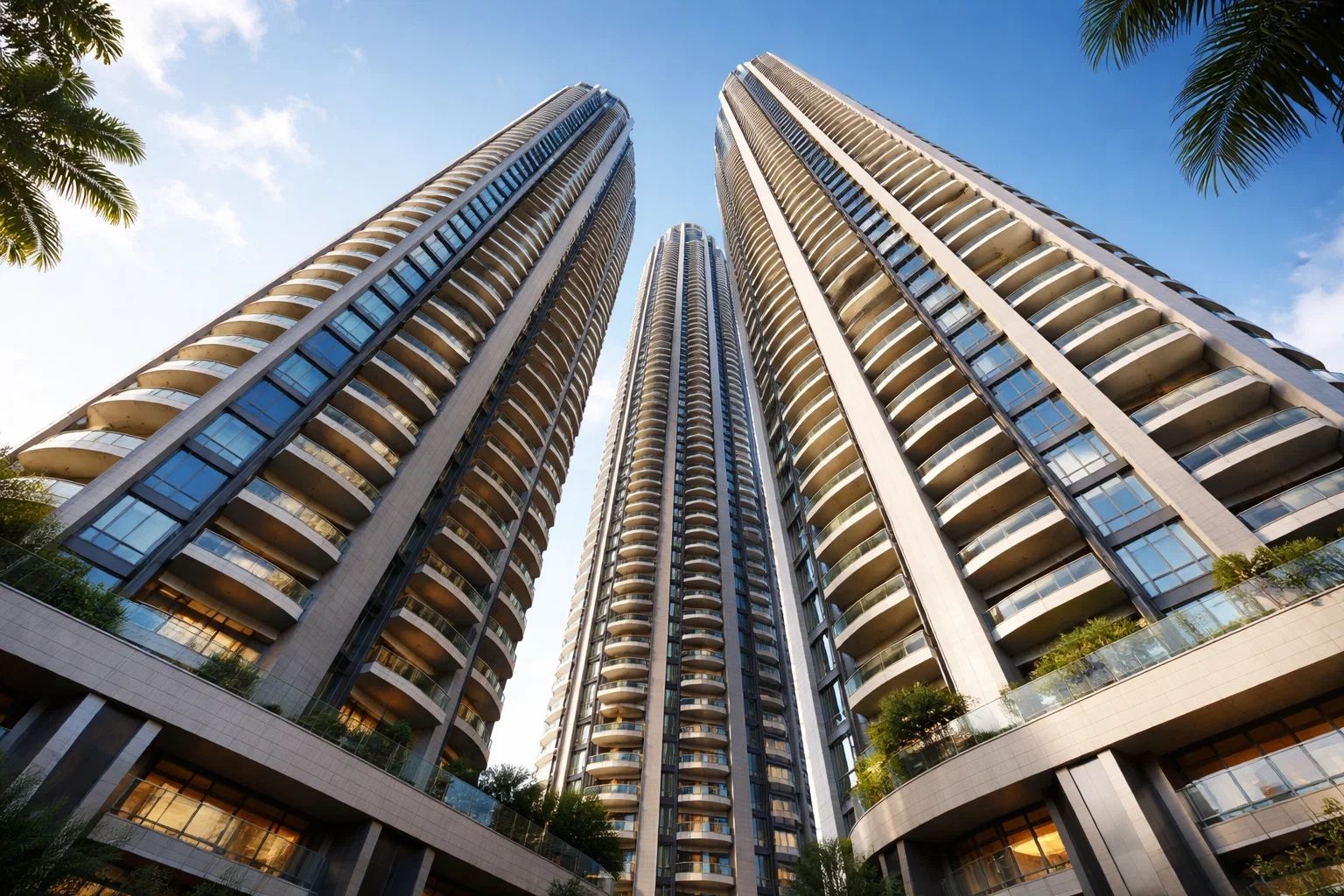
Want a Higher Floor in Mumbai Redevelopment? Know the Extra Cost
When your society in Mumbai goes for redevelopment, one of the most exciting moments is choosing your new flat. And naturally, many members have a preference — they want a flat on a higher floor. The view, the ventilation, the prestige, and even the resale value all improve as you go up.
But here is the catch — higher floors come at a price. Understanding how floor rise charges work in redevelopment can help you plan better and avoid unpleasant surprises.
What Are Floor Rise Charges?
Floor rise is the additional amount charged for a flat on a higher floor compared to one on a lower floor. In the open market, builders routinely charge floor rise premiums — typically ranging from Rs. 50 to Rs. 200 per square foot for every additional floor, depending on the project and location.
In a redevelopment project, the same principle may apply. If you are an existing member who wants a flat on, say, the 15th floor instead of the 5th floor, the builder may charge you a premium for the difference.
How Is the Floor Rise Calculated?
The exact rate varies from project to project. Some builders charge a flat rate per floor per square foot, while others have a slab system where the premium increases in bands — for example, floors 1 to 5 at no extra charge, floors 6 to 10 at Rs. 100 per square foot, and floors 11 and above at Rs. 200 per square foot.
There is no standard formula prescribed by law. It is entirely a matter of negotiation between the society and the builder. This is precisely why members need to ask about floor rise charges during the proposal stage — not after the agreement is signed.
What Should You Ask the Builder?
Before your society finalises the builder, make sure the following points are crystal clear. What is the exact floor rise charge per floor? Is the floor rise applied on the entire carpet area or only on the additional area? Is there a range of floors where no floor rise applies for existing members? How will the allocation of floors be decided — by seniority, lottery, or some other method? Can members who do not want a higher floor benefit from choosing a lower floor, such as getting a discount?
The Allocation Process Matters
Floor allocation can become a contentious issue within the society. Some members may feel that the managing committee or certain office bearers have been given preferential treatment. To avoid disputes, insist that the allocation process is transparent and fair — preferably decided through a lottery system conducted in the presence of all members.
The Development Agreement should clearly outline the allocation process so that there are no ambiguities or favouritism later.
Make an Informed Choice
Choosing a higher floor is a personal preference, and it can enhance your living experience significantly. But it is a financial decision that should be made with full knowledge of the costs involved. Factor in the floor rise premium along with other expenses like stamp duty on the higher value, registration fee, and any GST implications.
Legal Framework for Floor Rise Charges in Redevelopment
While there is no specific statute in Indian law that prescribes a formula for floor rise charges, several legal principles apply. Under RERA, the developer is required to disclose the total price of the flat, including all additional charges, in the agreement for sale. This means that floor rise charges cannot be sprung on the member as a surprise after the Development Agreement is signed. They must be clearly mentioned, quantified, and agreed upon before the agreement is executed and registered.
The Maharashtra Ownership Flats Act (MOFA) 1963 requires the promoter to provide a detailed breakdown of costs in the agreement. Any charge that is not mentioned in the registered agreement is not legally enforceable. This gives society members a strong legal position to challenge any floor rise charge that was not explicitly agreed upon during the negotiation stage.
MahaRERA has taken the position in multiple orders that all charges payable by the flat buyer, including floor rise premiums, must be part of the all-inclusive price disclosed at the time of registration. Developers who attempt to levy additional charges that were not part of the registered agreement have been directed to refund these amounts with interest. In the context of redevelopment, this principle applies equally. The Development Agreement should state the exact floor rise formula, the applicable floor range, and the total amount payable by any member who opts for a higher floor.
The Bombay High Court has also addressed the issue of floor rise in several cases related to redevelopment disputes. The Court has consistently held that any charge levied on society members must be reasonable, transparent, and agreed upon by the general body through a proper resolution. A floor rise charge that is disproportionately high or that was not approved by the general body can be challenged before the Cooperative Court or the High Court.
Stamp Duty and Registration Implications of Floor Rise
One aspect of floor rise charges that members often overlook is the stamp duty implication. Under the Indian Stamp Act, 1899 and the Maharashtra Stamp Act, the stamp duty on a flat is calculated based on the total consideration or the ready reckoner value, whichever is higher. When a member pays a floor rise premium, the total consideration for the flat increases, which may result in a higher stamp duty liability.
For example, if the base value of a flat is Rs. 1 crore and the member pays a floor rise premium of Rs. 10 lakh for a higher floor, the total consideration becomes Rs. 1.10 crore, and the stamp duty will be calculated on this higher amount. In Mumbai, where the stamp duty rate for residential property is typically six percent (five percent stamp duty plus one percent metro cess), this translates to an additional stamp duty of approximately Rs. 60,000 on the floor rise premium alone.
Additionally, the Goods and Services Tax (GST) implications of floor rise charges in redevelopment need careful consideration. Under the current GST framework, the sale of under-construction property attracts GST at the rate of five percent for residential properties without input tax credit, or one percent for affordable housing. The floor rise premium, being part of the total consideration, is also subject to GST. This means that a member paying a floor rise premium of Rs. 10 lakh would also need to pay GST of Rs. 50,000 (at five percent) on this amount.
The registration fee, typically one percent of the property value in Maharashtra (subject to a maximum of Rs. 30,000), is also calculated on the total consideration including the floor rise premium. Members should factor in all these additional costs when calculating the true cost of choosing a higher floor.
Negotiating Floor Rise Terms in the Development Agreement
The negotiation of floor rise terms is one of the most critical financial aspects of any redevelopment agreement. There are several approaches that societies have successfully used to manage this issue.
The first approach is to negotiate a cap on floor rise charges. For example, the society can insist that the total floor rise premium should not exceed a certain percentage of the base cost of the flat. A typical benchmark used in Mumbai redevelopment projects is a maximum of Rs. 50 to Rs. 150 per square foot per floor, depending on the location and the premium nature of the project.
The second approach is to negotiate a free floor range. Many Development Agreements provide that the first five to seven floors carry no floor rise premium, and the charges apply only from the eighth floor onwards. This ensures that the majority of existing members, particularly senior citizens who may prefer lower floors, are not penalised, while those who desire the higher floors pay a fair premium.
The third approach involves creating a floor rise corpus that benefits the entire society. Some societies have negotiated clauses where the floor rise collected from members who opt for higher floors goes into a society maintenance corpus rather than to the builder. This approach aligns the financial interests of all members and ensures that those who pay more for higher floors contribute to the collective benefit of the society.
It is important to ensure that the floor rise formula is applied consistently and that no special deals are made for individual members or committee members outside of the agreed framework. The general body resolution approving the Development Agreement should specifically record the floor rise terms, and any deviation should require a fresh general body approval with a minimum two-thirds majority.
Let Asahi Legal Guide Your Decision
At Asahi Legal, we help society members understand every financial detail of their redevelopment deal — including floor rise charges, allocation processes, and the legal protections you need. We ensure that the terms are fair and that no member is disadvantaged in the process.
Thinking about your new flat on a higher floor? Contact Asahi Legal today to ensure you make the right choice with complete clarity.
Contact Asahi Legal — Visit asahilegal.in or reach out directly for expert redevelopment advice.
Author: Amit | Asahi Legal
This article is for general information only and is not legal advice or an invitation to engage the firm. Laws and judgments change; please obtain specific legal advice before acting.