

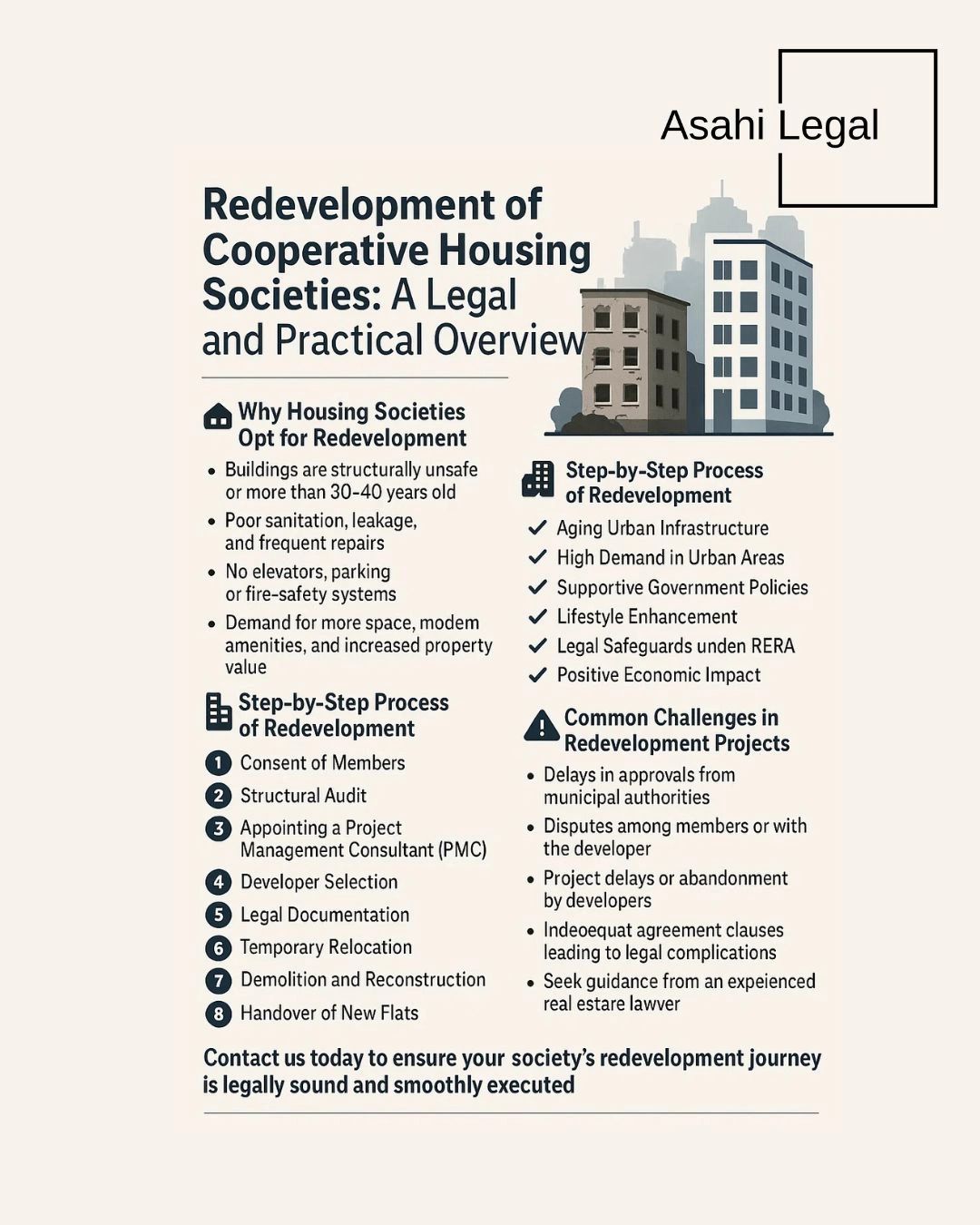
Redevelopment of Cooperative Housing Societies: A Legal and Practical Overview
Redevelopment refers to the process of reconstructing or replacing aging, dilapidated, or poorly maintained buildings with new structures that meet modern safety, infrastructure, and lifestyle standards. In the case of cooperative housing societies, this typically involves partnering with a qualified real estate developer to demolish the old building and construct a new one, offering better amenities and living conditions to all members.
Why Housing Societies Opt for Redevelopment
Thousands of cooperative societies in urban India—particularly in cities like Mumbai, Pune, Delhi, and Bengaluru—are over 30 to 50 years old. Over time, these buildings face structural deterioration, lack modern facilities, and become financially burdensome to maintain.
Key reasons for undertaking redevelopment:
- Buildings are structurally unsafe or more than 30–40 years old
- Poor sanitation, leakage, and frequent repairs
- No elevators, parking, or fire-safety systems
- Demand for more space, modern amenities, and increased property value
- Maximizing the potential of high-value urban land
Step-by-Step Process of Redevelopment
Here’s a simplified outline of the typical redevelopment process for cooperative housing societies:
1. Consent of Members
At least 70% of the society’s members must provide written consent to initiate the redevelopment process.
2. Structural Audit
An accredited engineer conducts a structural audit to determine the building’s safety and need for redevelopment.
3. Appointing a Project Management Consultant (PMC)
A PMC helps guide the society through feasibility assessments, legal compliances, and developer selection.
4. Developer Selection
A transparent tender process is used to choose a financially sound and reputed developer.
5. Legal Documentation
A registered Development Agreement is signed, detailing timelines, compensation, carpet area, rights, and responsibilities.
6. Temporary Relocation
During reconstruction, the developer provides rent compensation or alternative accommodation to the members.
7. Demolition and Reconstruction
The old building is demolished, and a new, upgraded structure is constructed in its place.
8. Handover of New Flats
Residents receive possession of their newly constructed flats, often with extra carpet area and enhanced amenities.
Redevelopment: The Way Forward for Urban Housing
Redevelopment is rapidly gaining momentum as the most effective solution to rejuvenate aging urban infrastructure. Here’s why it is becoming a necessity:
1. Aging Urban Infrastructure
Buildings over 30 years old are often unsafe and energy-inefficient. Redevelopment ensures structural safety and compliance with modern codes.
2. High Demand in Urban Areas
Cities are expanding, but land remains limited. Redevelopment helps meet population needs without compromising on space or quality of life.
3. Supportive Government Policies
States like Maharashtra, Gujarat, and Delhi offer incentives such as additional FSI (Floor Space Index) and streamlined approval processes.
4. Lifestyle Enhancement
Residents benefit from:
- Modern elevators
- Security systems
- Fire safety compliance
- Ample parking and recreational facilities
- Increased property value and better resale potential
5. Legal Safeguards under RERA
The Real Estate (Regulation and Development) Act, 2016 (RERA) offers protection against delays, fraud, and quality issues by holding developers accountable.
6. Positive Economic Impact
Redevelopment drives:
- Job creation in the construction sector
- Higher government revenue from GST, stamp duty, and registrations
- Better planning and use of urban infrastructure
Common Challenges in Redevelopment Projects
Despite its benefits, redevelopment can face various hurdles:
- Delays in approvals from municipal authorities
- Disputes among members or with the developer
- Project delays or abandonment by developers
- Lack of awareness of legal rights and responsibilities
- Inadequate agreement clauses leading to legal complications
Best Legal Practices for Smooth Redevelopment
A well-planned and legally compliant redevelopment project is key to success. Here are legal safeguards every society should consider:
- Conduct a thorough structural audit before initiating the process
- Appoint a Project Management Consultant to oversee progress
- Ensure fair and transparent bidding to select a qualified developer
- Include bank guarantees and penalty clauses in the Development Agreement
- Form a society-appointed monitoring committee to track milestones
- Seek guidance from an experienced real estate lawyer
Conclusion: A Necessary Step Toward Urban Transformation
Redevelopment of cooperative housing societies is not just a real estate solution—it is a necessity for sustainable and safe urban living. With a well-structured legal process, responsible developers, and proactive society members, redevelopment can transform outdated buildings into thriving, modern residential spaces.
It brings long-term benefits such as:
- Enhanced property value
- Improved infrastructure
- Better quality of life
- Safer living environments
Need Assistance with Redevelopment Legalities?
At Asahi Legal, we specialize in:
- Drafting and vetting Development Agreements
- Ensuring compliance with RERA and municipal laws
- Advising societies on developer negotiations and disputes
- Providing legal due diligence and safeguard mechanisms
Contact us today to ensure your society’s redevelopment journey is legally sound and smoothly executed.
This article is for general information only and is not legal advice or an invitation to engage the firm. Laws and judgments change; please obtain specific legal advice before acting.