

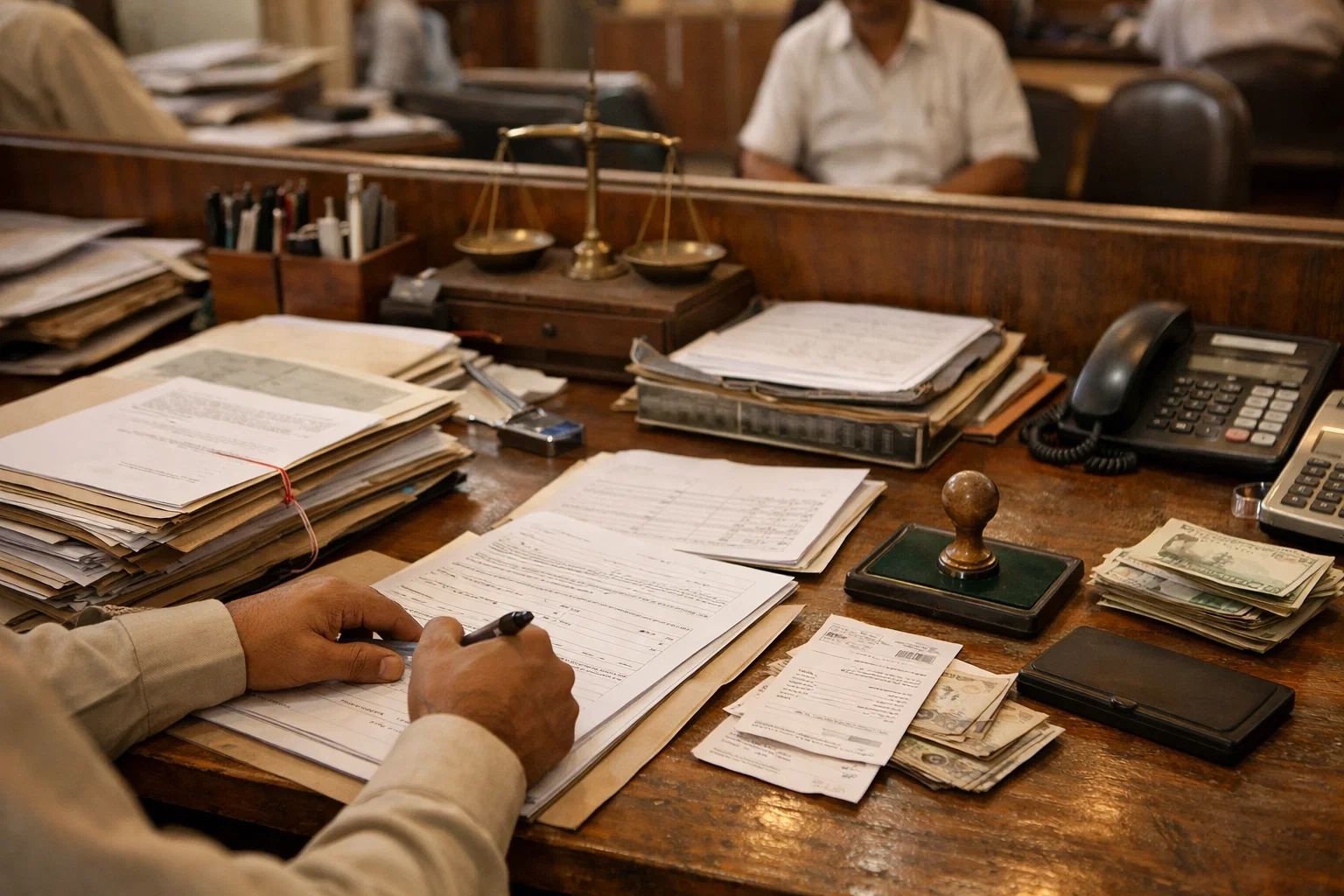
Registration Fee in Mumbai Redevelopment — Who Bears the Cost?
When your housing society in Mumbai undergoes redevelopment, there is a long list of expenses that need to be sorted out between the builder and the society members. One cost that often does not get the attention it deserves is the registration fee.
Registration fee is the charge you pay to the government when registering your property documents — and in a redevelopment project, it can add up to a considerable sum. So who pays it? Let us break it down.
What Is Registration Fee and When Does It Apply?
In Maharashtra, when any property document is executed — whether it is a sale deed, a development agreement, or an individual flat agreement — it must be registered with the Sub-Registrar of Assurances. The registration fee is a statutory charge levied at the time of this registration.
In the context of redevelopment, registration fee typically applies on the Development Agreement executed between the society and the builder, the individual agreements executed between the builder and each existing member for the allotment of the new flat, and any agreement for additional area purchased by a member.
The registration fee in Maharashtra is generally one percent of the market value or the consideration amount, subject to a cap of Rs. 30,000 in most cases for residential properties.
The Big Question — Builder or Member?
Like stamp duty, the question of who pays the registration fee depends entirely on what is negotiated and documented in the Development Agreement. In an ideal scenario, the builder should bear the registration fee for the member’s entitled flat, since the member is not purchasing a new property but receiving a replacement for the flat they already own.
However, if a member is purchasing additional carpet area, the registration fee on that additional portion may be charged to the member. This is a negotiable point and should be addressed during the proposal stage itself.
Why Members Often End Up Paying More Than They Should
The problem arises when registration fee is not explicitly discussed during the initial negotiation. Society members focus on the headline terms — extra area, corpus, rent — and overlook the smaller line items like registration fee. But when you multiply a few thousand rupees across dozens of members, it becomes a significant amount.
Some builders may include a general clause stating that all government levies and charges will be borne by the member. This kind of broad language can trap members into paying not just registration fee but a range of other charges that could have been negotiated.
What Every Society Member Should Do
Before your society finalises the builder, make sure the proposal explicitly states who will bear the registration fee — for the entitled flat as well as for any additional area. This should be captured in the Memorandum of Understanding and subsequently in the Development Agreement.
Also, ask your legal advisor to review the agreement for any vague language around government levies, charges, or taxes. Every ambiguous clause is a potential area of dispute later.
Asahi Legal Can Help You Negotiate Better Terms
At Asahi Legal, we have seen numerous instances where society members ended up paying registration fees and other charges that should have been the builder’s responsibility — simply because the agreement was not drafted properly.
We help societies negotiate clear, member-friendly terms and ensure that every expense is accounted for and allocated fairly. Do not let avoidable costs eat into the benefits of your redevelopment.
Contact Asahi Legal today to have your redevelopment proposal reviewed by our expert team.
Contact Asahi Legal — Visit asahilegal.in or reach out directly for a consultation.
Author: Amit | Asahi Legal
This article is for general information only and is not legal advice or an invitation to engage the firm. Laws and judgments change; please obtain specific legal advice before acting.