

Will Your Society Get a Separate Office in Mumbai Redevelopment?
When your housing society in Mumbai goes for redevelopment, the focus is usually on individual flats — bigger rooms, better amenities, and a modern building. But there is one important community need that often gets overlooked in the discussions — will the society have a dedicated office space in the new building?
A separate society office may not be the most glamorous topic in redevelopment, but it is one of the most practical. Here is why it matters and what you should demand from your builder.
Why Does a Society Need Its Own Office?
Every co-operative housing society has administrative needs. Monthly committee meetings, document storage, member interactions, maintenance staff coordination, and dealing with government authorities — all of these require a dedicated space.
In many older buildings in Mumbai, the society office is squeezed into a small corner of the ground floor, or worse, it does not exist at all. Meetings happen in someone’s living room, and important documents are stored in a committee member’s personal cupboard. Redevelopment is the perfect opportunity to fix this.
What Should the Society Office Include?
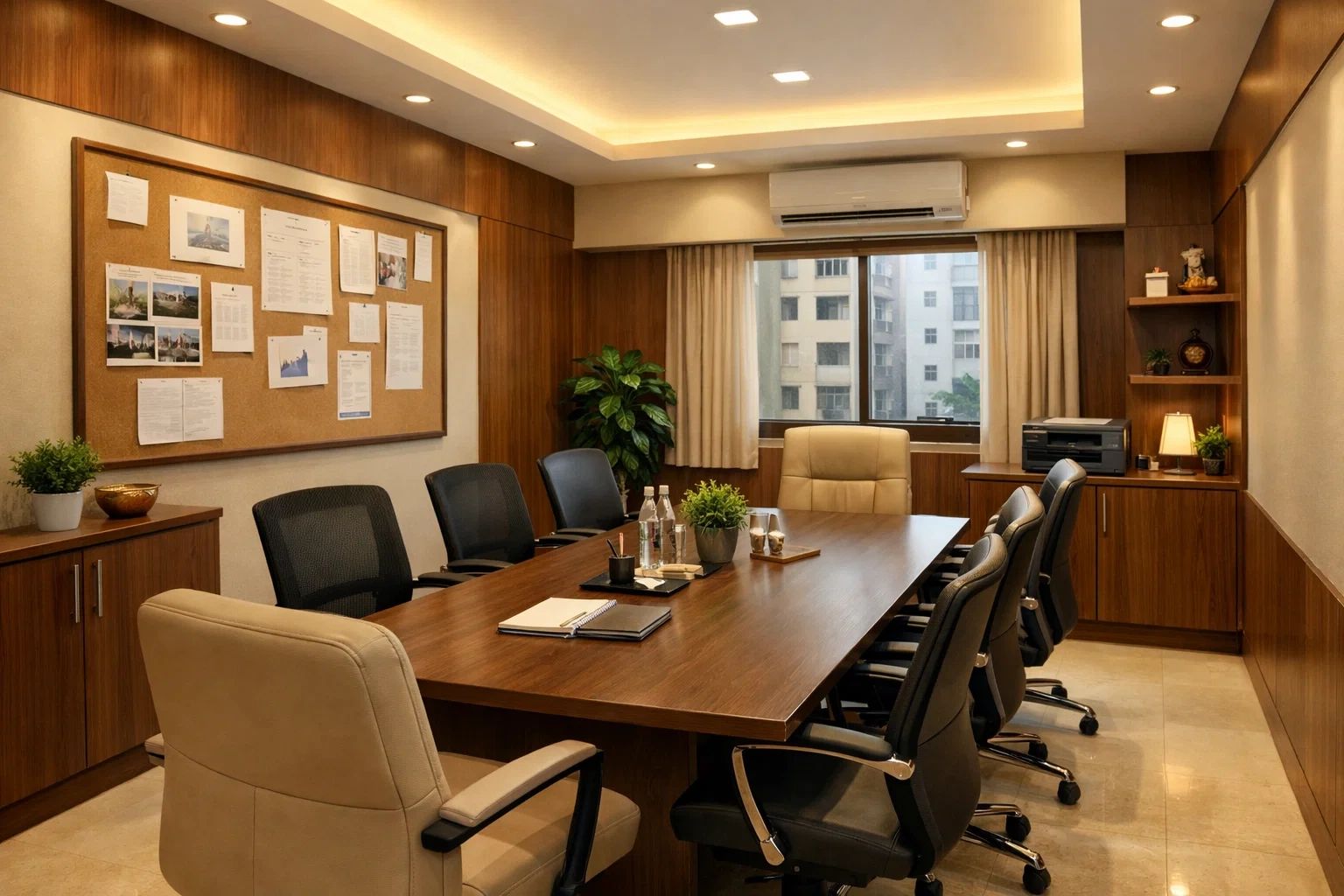
A well-designed society office should have adequate space for committee meetings with seating for all members, a secure storage area for society records and documents, a small reception or counter for member interaction, basic amenities such as lighting, ventilation, air conditioning, and electrical outlets, and access to a washroom.
The size of the office will depend on the number of members in the society, but a minimum of 150 to 200 square feet is advisable for most societies. For larger societies or complexes, a bigger space may be needed.
Asking the Right Questions
During your discussions with the builder, make sure to ask where the society office will be located within the new building. Ground floor access is ideal for convenience. Ask about the exact carpet area of the proposed office and whether it will have separate metering for electricity and water. Find out if the office space will be registered in the society’s name and whether the cost of furnishing the office is included in the builder’s scope.
Do not accept vague assurances like the builder saying there will be provision for a society office. Get it in writing, with specific dimensions and location marked on the approved building plan.
The Common Pitfall
One of the most common issues we see is that builders include a society office in their initial proposal but, as the project progresses, they either reduce its size or relocate it to a less convenient part of the building. This usually happens because the builder wants to maximise the saleable area and sees the society office as expendable.
To prevent this, the Development Agreement should clearly specify the society office — its location, dimensions, and specifications — and any changes should require the society’s written approval.
A Community Investment That Lasts Generations
A dedicated society office is not just about convenience — it is about governance. A well-run society needs a proper administrative setup, and that starts with having a dedicated space. For the new generation of residents who will live in the redeveloped building, the society office will be the hub of community management for decades to come.
Asahi Legal Protects Your Community’s Interests
At Asahi Legal, we look beyond individual flat entitlements when reviewing redevelopment agreements. We ensure that community assets like the society office, common areas, and shared amenities are properly documented and protected.
If your society is planning redevelopment, contact Asahi Legal to make sure every aspect of your
Legal Framework for Society Office in Redevelopment
The Maharashtra Cooperative Societies Act, 1960 and the Maharashtra Ownership Flats Act (MOFA), 1963 provide the legal foundation for society offices in redevelopment projects. Under these statutes, the society office is classified as a common area belonging to all members collectively. The Development Agreement must explicitly address the society office as a separate component, distinct from individual flat allotments. Any attempt by the developer to reduce the society office area or change its location without the society’s consent can be challenged under these laws.
RERA (Real Estate Regulation and Development Act, 2016) further strengthens the position of housing societies by mandating that common areas, including the society office, must be clearly defined in the registered project plans. The developer is legally obligated to construct the society office as per the approved plans and hand it over to the society along with the completion certificate and occupation certificate for the project.
Key Clauses to Include in the Development Agreement
When negotiating the Development Agreement, the society must insist on several critical clauses regarding the society office. The agreement should specify the exact location of the office within the building, preferably on the ground floor with direct access from the main entrance. The minimum carpet area should be clearly mentioned, along with the ceiling height and structural specifications.
The agreement should also address the timeline for construction and handover of the society office relative to the overall project timeline. It is advisable to include a penalty clause for delays in constructing or handing over the society office. The finishing standards, including flooring, wall treatment, electrical fittings, plumbing, air conditioning provisions, and furniture, should be documented in an annexure to the agreement.
The society should also negotiate for additional provisions such as dedicated parking for society vehicles, a separate electricity meter for the office, internet connectivity provisions, CCTV camera access, and a small pantry or utility area adjacent to the office. These details may seem minor during negotiations but become important once the society moves into the new building.
Common Disputes and How to Avoid Them
Disputes regarding the society office are among the most common issues that arise during and after redevelopment projects. The most frequent dispute involves the developer reducing the area of the society office to accommodate additional saleable apartments. This can be prevented by getting the society office area specifically mentioned in the RERA registration and the sanctioned building plans.
Another common issue is the developer handing over the society office in an incomplete or poorly finished condition. The society should appoint an independent architect to inspect the office before accepting the handover and prepare a detailed snag list. The retention amount held back from the developer’s corpus fund should only be released after all snag items have been rectified.
Location disputes also arise when the developer moves the society office from the ground floor to a less accessible upper floor or basement level without the society’s consent. The society should ensure that the exact floor and wing location is specified in the Development Agreement and that any change requires a special resolution by the general body.
Digital Infrastructure for the Modern Society Office
In the era of digital governance, the modern society office should be equipped with digital infrastructure that enables efficient society management. This includes a computer system with society management software for maintaining accounts, tracking maintenance payments, managing visitor logs, and storing member records digitally.
The office should have high-speed internet connectivity, a multifunctional printer and scanner for document management, and adequate electrical points for all equipment. The society may also consider installing a digital display board in or near the office for notices and announcements, which reduces paper waste and ensures that important communications reach all members.
For security, the society office should have access to the building’s CCTV monitoring system and intercom connectivity with the security gate. A fire-safe cabinet or locker for storing important original documents such as the society registration certificate, land documents, property cards, completion certificates, and the Development Agreement is essential.community’s future is taken care of — not just the flats, but the spaces that bring your community together.
Contact Asahi Legal — Visit asahilegal.in or reach out directly for a comprehensive redevelopment review.
Author: Amit | Asahi Legal
This article is for general information only and is not legal advice or an invitation to engage the firm. Laws and judgments change; please obtain specific legal advice before acting.