

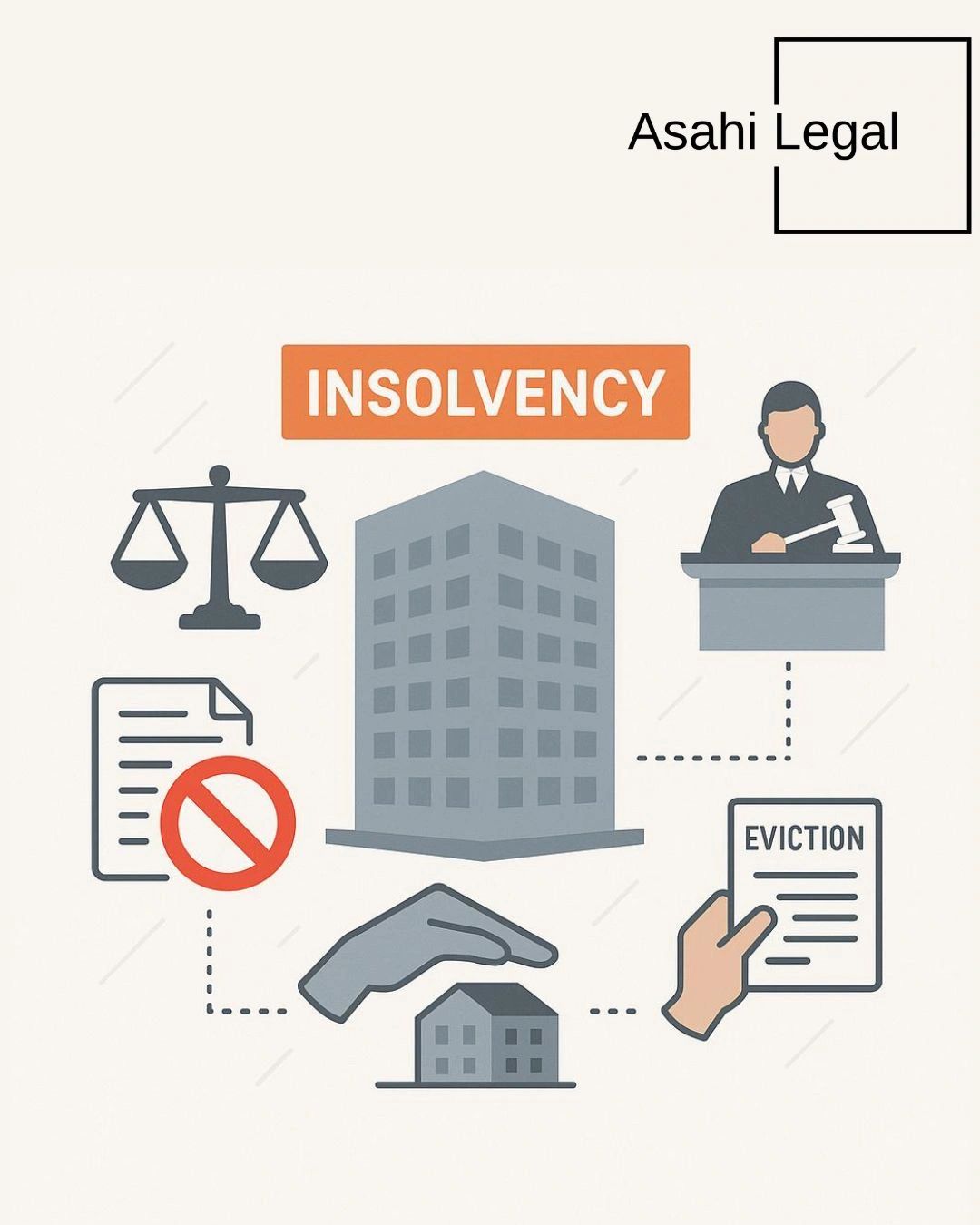
Introduction: Why the Moratorium Shapes Every Insolvency Strategy
When the Insolvency and Bankruptcy Code, 2016 introduced the moratorium under Section 14, practitioners quickly realised it was far more than a procedural pause: it became the legal bulwark that keeps a financially distressed company alive long enough to be rescued. In India’s crowded corporate–creditor landscape, this statutory “freeze” prevents any creditor, landlord or governmental authority from stripping the debtor of vital assets or commencing fresh litigation, thereby giving the resolution professional the breathing space required to craft a viable resolution plan. Understanding the scope, limits and evolving judicial interpretation of Section 14 is therefore crucial for resolution professionals, lenders, landlords and potential investors alike.
Decoding Section 14 of the IBC: Timing, Trigger and Breadth
Section 14 springs into effect the moment the National Company Law Tribunal admits an insolvency application under Section 7 (filed by a financial creditor), Section 9 (filed by an operational creditor) or Section 10 (filed by the corporate debtor). From that instant, no new proceedings may be filed against the corporate debtor, ongoing suits must halt, security interests cannot be enforced, and—critically for today’s discussion—even property that the debtor merely occupies under a lease or licence cannot be repossessed. The legislature’s deliberate use of the broad term “occupied” rather than the narrower “owned” underscores Parliament’s intent to protect possession‐based rights whenever those rights are necessary to keep the debtor functioning as a going concern.
Leasehold Possession versus Ownership: An Expansive Judicial Reading
Early challenges centred on whether leasehold property enjoys the same shield as freehold assets. Critics argued that landlords retain superior title and should be permitted to evict a defaulting tenant notwithstanding the moratorium. Indian appellate courts have consistently rejected that argument, reasoning that insolvency law must override narrower property claims when the leased premises are essential to the corporate debtor’s survival. The term “occupied” has thus evolved into a powerful statutory guarantee that extends the moratorium’s protective cloak to factories on industrial land, retail stores in leased malls and even office premises held under renewable licences.
The Turning-Point Case: Divyesh Desai (RP of GPT Steels) v GIDC
GPT Steel Industries Ltd. leased its manufacturing plots from the Gujarat Industrial Development Corporation (GIDC). When GPT entered CIRP, GIDC filed claims for unpaid lease rentals; but while the resolution professional was still verifying those claims, the corporation issued a lease-termination notice and demanded eviction for non-payment amounting to ₹1.22 crore. The National Company Law Tribunal refused to intervene, suggesting the RP use GIDC’s internal appeal mechanism—a stance that effectively side-stepped Section 14. On appeal, however, the National Company Law Appellate Tribunal reversed the decision, holding that the moratorium squarely prohibits landlords from terminating leases, regardless of rental arrears, as long as the premises remain occupied by the corporate debtor. The appellate body anchored its reasoning in the Supreme Court’s earlier ruling in Rajendra K. Bhutta v MHADA, which had already confirmed that the IBC overrides conflicting statutes by virtue of Section 238’s non-obstante clause. Crucially, the NCLAT characterised leasehold possession as an “intangible yet indispensable asset” that deserves protection because it sustains the continuity of the debtor’s operations, preserves jobs and maximises the chances of receiving better bids from resolution applicants.
Key Legal Takeaways Reinforcing the Moratorium’s Reach
First, possession rather than title is the decisive criterion. The courts have made it clear that if the corporate debtor physically occupies premises integral to its business, those premises fall within the moratorium—even when the creditor holds superior legal title. Second, Section 238 acts as a statutory trump card. Any state legislation or contractual provision that clashes with IBC objectives must yield, thereby reinforcing the Code’s supremacy and promoting uniformity across India’s insolvency regime. Finally, judicial reliance on the interpretive maxim reddendo singula singulis ensures that each word in Section 14 retains full force: ignoring the word “occupied” would strip the subsection of purpose and undermine the debtor-protection scheme.
Practical Implications for Resolution Professionals, Creditors and Landlords
For resolution professionals the judgment provides an invaluable precedent for resisting eviction notices and ensuring uninterrupted use of leased assets, thereby making the distressed entity more attractive to bidders. Robust reliance on Divyesh Desai can deter landlords from unilateral action and shift their claims into the CIRP’s creditor hierarchy, where they must await distributions approved by the Committee of Creditors. Financial creditors benefit indirectly because the debtor can continue operations, thereby preserving asset value and enhancing recovery prospects. Landlords and lessors, on the other hand, must recalibrate their risk-management strategies: they remain free to submit rental arrears as operational debt, but they may not disrupt possession during the insolvency window. This shift incentivises landlords to conduct better credit assessments before leasing to corporations and nudges them towards negotiated settlements rather than precipitous terminations.
Continuing Uncertainties and the Call for Statutory Clarification
Despite the persuasive clarity of Divyesh Desai, interpretive inconsistencies persist in lower tribunals, particularly where premises are used for non-core activities or where the lease has technically expired before CIRP admission. Legislative amendments or a definitive Supreme Court ruling clarifying these grey areas would fortify India’s insolvency architecture, balancing debtor protection with legitimate lessor interests. Likewise, a statutory framework for interim rental payments could ensure that landlords are not left uncompensated during prolonged resolution timelines.
Conclusion: Consolidating the Moratorium’s Role in India’s Insolvency Ecosystem
Section 14’s moratorium remains the linchpin of the Corporate Insolvency Resolution Process because it creates a stable legal environment in which a business can be rescued rather than dismantled. By extending that protective shield to leasehold rights—as affirmed in Divyesh Desai v GIDC—Indian insolvency jurisprudence recognises that operational continuity often hinges on the uninterrupted use of premises. While landlords may perceive this as a short-term setback, the broader economic benefit lies in preserving enterprise value, securing employment and fostering lender confidence. As judicial precedent deepens and statutory refinements emerge, stakeholders should anticipate a more predictable and balanced insolvency landscape—one in which the moratorium not only freezes adverse actions but also thaws the path to timely, value-maximising resolutions.
This article is for general information only and is not legal advice or an invitation to engage the firm. Laws and judgments change; please obtain specific legal advice before acting.